

With Lionel Messi, Son Heung-min and Thomas Müller on the field, MLS is back on the radar when it comes to global stars, as a concrete alternative at specific points in a player’s career. The league hasn’t become the new center of world soccer, far from it. But it’s no longer just an automatic last stop. It attracts young players who are having real success, like Evander, and it just added Sergio Reguilón as Inter Miami’s latest signing. And there’s still room to dream a bit bigger. Which big names could show up in the league? Today, the question going around isn’t “who can MLS sign?” but rather “which players would actually make sense in this scenario?” A few names stand out.
Mohamed Salah is still elite, but the clock is ticking
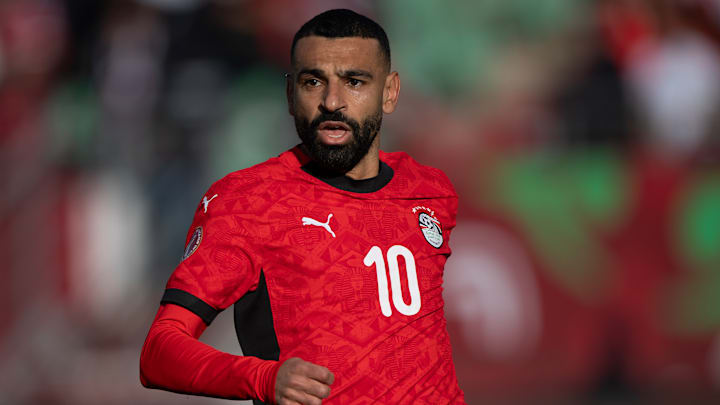
Mohamed Salah continues to put up numbers as a game-changing player, even with Liverpool going through ups and downs. His contract runs until 2027, the price tag is high, and competition from Saudi Arabia and the European market is heavy. Still, there’s one detail that draws attention. Salah spent most of his career playing wide, but he has also operated inside, closer to goal. On an organized MLS team, playing as a central forward, he would make an immediate impact.
It wouldn’t be a simple or cheap move, but he’s the kind of name who, if he ever leaves Europe, wouldn’t come just to go through the motions. And that could happen sooner rather than later, especially with the relationship between player and club clearly strained.

Lewandowski keeps producing and the door may open
Robert Lewandowski is far from a shadow of his former self. Even at 37, he keeps stacking goals at Barcelona and closing in on historic club marks. The key detail is his contract. He’s heading into the final year of his deal, Barça needs to refresh the squad, and the number 9 role is likely to be contested. Lewandowski is professional, competitive, and still performing at a high level. If he leaves, he’ll be looking for minutes and a leading role. On a strong MLS team, that’s exactly what he’d get.
Bernardo Silva is a tough dream, but not an absurd one
Bernardo Silva is the most complex case on the list. He’s 31, still in his prime, and draws interest from major European clubs, along with markets like Turkey and Saudi Arabia. Even so, his name comes up because his contract is nearing its end and his style of play ages well. Bernardo doesn’t rely on physical explosiveness. He reads the game. On a dominant MLS team, he’d play with freedom, either as a central midfielder or in a more advanced role. Difficult? Very. Impossible? No.
Ter Stegen is the under-the-radar name who changes everything
Marc-André ter Stegen doesn’t usually show up on lists like this, and that may be why he’s the most interesting name of all. The goalkeeper has a long contract with Barcelona but has lost ground, faces direct competition, and needs playing time with the 2026 World Cup in mind. He’s looking for minutes. For clubs like Seattle Sounders or LA Galaxy, he would be a signing that changes the team’s dynamic without altering its identity.
MLS hasn’t become an obvious destination for global stars. But it’s no longer improbable. When a player’s moment, contract, and context line up, the league enters the conversation. It won’t always happen. It won’t always work. But now, at least, it makes sense to talk about it. And that, by itself, is already a big change. You might think these players are “old,” but don’t forget, age today doesn’t mean much. When an athlete takes care of himself, he can still deliver at a high level.
 Add us as a preferred source on Google