

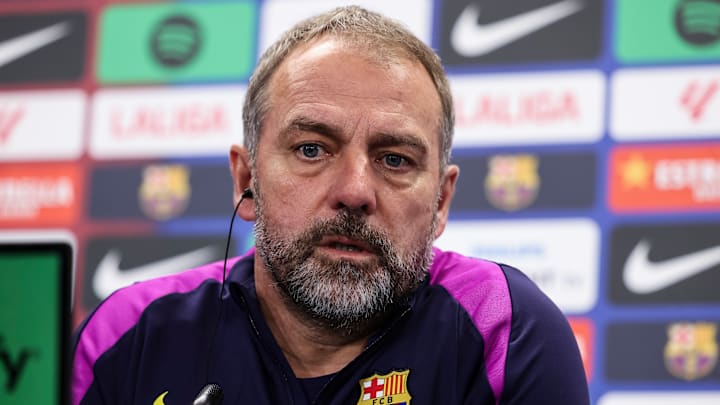
The potential move by Mohammed bin Salman to buy Barcelona, according to journalist François Gallardo from El Chiringuito, with an estimated €10 billion offer, draws attention less because of the number itself and more because of the club involved. When one of the most powerful men in the world becomes linked to Barça, the discussion stops being purely financial and starts touching on identity, governance, and the delicate moment the Catalan club is going through. It’s a move that only makes sense because Barcelona sits at a rare intersection of global size, economic fragility, and sustained sporting relevance.
Barcelona remain one of the most valuable and recognizable clubs on the planet. They lead La Liga, maintain a massive global audience, and generate high revenues year after year. At the same time, they carry a debt of more than £2.2 billion, the result of years of poor management, risky sporting bets, and a model that demands constant creativity just to balance the books. It’s precisely this contradiction that makes the club so attractive to outside investors. Barça are too big to fail, yet vulnerable enough to draw interest.

A giant defined more by what it represents
Valued at around £4.1 billion, Barcelona are currently the third most valuable soccer club in the world. Even so, their spending power has fallen behind rivals backed by virtually unlimited capital. Real Madrid, PSG, and Manchester City operate under a different financial logic. Barcelona, by contrast, rely on operating revenue, commercial deals, and short term solutions to stay competitive.
A €10 billion proposal would change everything. It would wipe out debt, allow for immediate sporting reconstruction, and place the club in a dominant financial position. The issue is that Barcelona don’t function like a typical company. The club belongs to its members, and that structure isn’t a bureaucratic footnote, it’s central to the club’s story. The idea of being “more than a club” has always been tied to collective ownership, not outside control.

External interest as a reflection of Barça's current situation
The difficulty in imagining this deal moving forward isn’t the price tag, but the model. Any deep structural change would need approval from the members, and resistance to a full foreign takeover would be strong. This isn’t just an internal political issue, it’s cultural. For many fans, accepting a billionaire owner would mean crossing a line with no way back, even if it solved long standing financial problems.
On the other hand, ignoring reality comes at a cost. Barcelona have been living under constant pressure, trying to balance sporting competitiveness with economic limits. Every transfer window turns into a financial puzzle. Every major renewal requires sacrifice. In that environment, the idea of an investor capable of putting out fires with ease starts to circulate, even if it feels uncomfortable.
Even if the proposal never materializes, it highlights a dilemma Barcelona are already facing. How long can a traditional model survive in a landscape increasingly dominated by clubs with near endless resources? The Catalan club continues to resist, but the pressure grows each season.
For now, everything remains in the realm of speculation. Still, the fact that this rumor has gained traction shows that Barcelona, even in crisis, remain one of the main centers of gravity in world soccer. And when a club reaches that point, no conversation about it is ever trivial.
 Add us as a preferred source on Google