

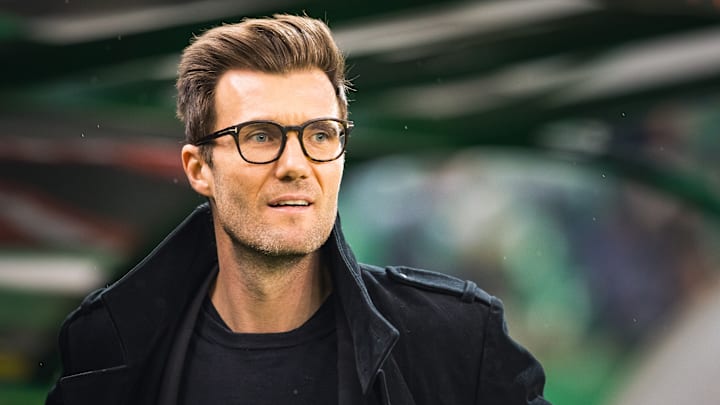
Sporting Kansas City made the most important decision of its post–Peter Vermes era by naming Raphael Wicky as its new permanent head coach, on a contract through 2027 with an option to extend, and that choice says more about what the club is willing to be now than about any short-term promises. After finishing 2025 in 15th place in the West and 27th overall, with a disorganized roster that offered no answers, Sporting decided to stop improvising and commit to a clear path, even if it makes part of the fan base uncomfortable.
The cold read is straightforward: the club needed someone from outside the bubble, with experience in different environments, who wasn’t emotionally tied to the recent past. Raphael Wicky fits that profile. A Swiss league and cup champion with BSC Young Boys, a stint in MLS with Chicago Fire FC, work with U.S. youth national teams, plus experience at player-development clubs in Europe. The résumé is real, but it isn’t bulletproof, and no one in Kansas City should pretend it is. His time in Chicago was bad in terms of results, full stop. The real debate is different: did he fail, or did he survive a roster built without logic by a general manager who signed players on impulse? A lot of people criticizing him now can’t honestly answer that.
What did Sporting really choose?
Among three possible paths, win now with the current roster, spend big to become a mediocre playoff team, or build a tactical identity that makes sense for a small-market club, Sporting chose the third.
There simply isn’t enough talent right now to compete for anything major, and piling on random signings would only push the problem down the road. Betting on Wicky makes sense in that context, because his teams have a clear idea of play, value possession, bring attacking intensity, and show collective organization.
David Lee made that explicit when he said he was looking for a collaborative leader with offensive, dynamic teams. If the roster isn’t rebuilt with purpose, there won’t be a quick turnaround, and that needs to be clear from the start.
A skeptical fan base, but no better alternative
Fan reaction swung between surprise, irony, and skepticism. There was “OH MY GOD,” there were jokes about announcing the next head coach 17 years from now, and plenty of doubt. What’s striking is that almost no one can point to a clearly better, realistic option. Soccer isn’t the NFL; there’s no short list of obvious candidates everyone knows. There are hundreds of capable coaches, and past results don’t guarantee anything, good or bad.
Wicky brings European experience, contacts, market awareness, and emotional distance from the recent chaos. That only turns into results if the front office backs him with coherent signings. Without that, any evaluation will be unfair. Now it’s time to stop looking in the rearview mirror and accept the risk of the path that was chosen.
 Add us as a preferred source on Google