

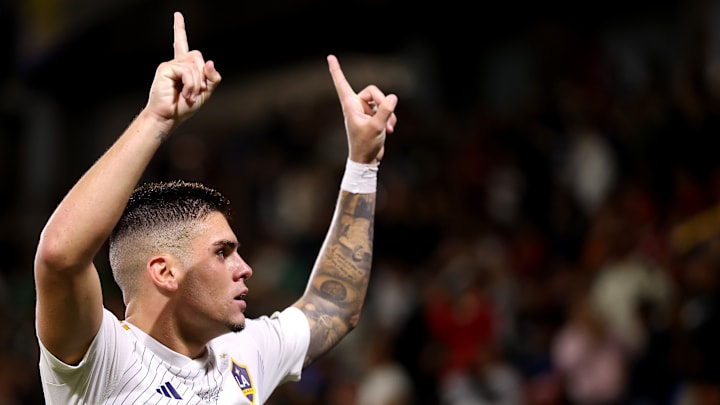
Gabriel Pec is close to completing two years with LA Galaxy and reaches this point with something that doesn’t always show up in the numbers but weighs heavily in a player’s career, a clear understanding of where he stands. The Brazilian forward experienced extremes in MLS in a short span, a title right after arriving, an individual award, a sharp drop the following year and now the expectation of a more solid restart in 2026. When Pec says the next season has to start strong, he’s describing a simple reality, those who start slow usually pay a high price.
The beginning was the kind that changes perception. In 2024, Pec not only adapted quickly but also helped Galaxy return to the top after ten years, winning the sixth title in club history. The impact was immediate, steady presence and direct involvement in a campaign that put the franchise back in the spotlight. Recognition came just as fast. He finished the year named the league’s best signing, ahead even of Luis Suárez, a name that needs no introduction.

From the top to a reality check
The contrast came in 2025. Galaxy collapsed, finished with the second-worst record in the Western Conference and missed the playoffs. A hard fall for a squad that had been riding momentum. Pec doesn’t shy away from that context and treats the setback as part of a maturation process. Learning from a bad year can be just as decisive as lifting a trophy. His comment about “starting the year flying” comes straight from that experience, from someone who felt firsthand the cost of trying to chase results later.
That stretch also helped Pec see himself as a more complete player. Less anxiety, more emotional control and a clearer understanding of his role within the team. It’s not just about repeating his 2024 numbers, but about sustaining performance throughout the season, something MLS demands relentlessly.
Life in the U.S. and a World Cup on the horizon
Off the field, Los Angeles gave Pec an experience few Brazilian players have so early. He followed closely the United States’ preparations for the 2026 World Cup and visited SoFi Stadium, one of the tournament’s venues, even if only as a fan. Being there helps put the scale of the event into perspective and shows how much the country is investing to establish itself in soccer as well.
In his day-to-day around the league, Pec closely watches the technical growth of local players and of the U.S. national team itself. When he mentions Diego Luna, a midfielder for Real Salt Lake and the No. 10 for the team coached by Mauricio Pochettino, he reinforces the sense of steady progress. “The United States has been growing in soccer, investing a lot. Their national team is getting stronger too,” he said in an interview with ge.globo, acknowledging improvement World Cup after World Cup.
MLS beyond the label
Pec also touches on a sensitive topic when he pushes back against the idea that MLS is a retirement league. For him, that image no longer holds up. The movement of Brazilian clubs targeting players who compete in the United States and athletes in their prime choosing MLS as a destination helps dismantle that label. “More and more, we’re seeing that it’s not true,” he said, pointing to the visibility and competitive level the league offers today.
 Add us as a preferred source on Google